

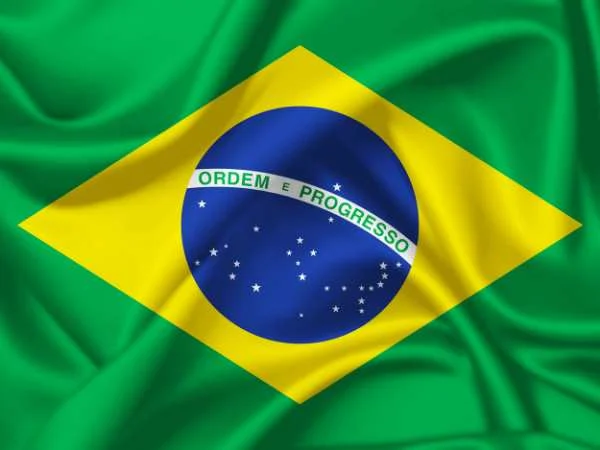
If you’ve ever looked at a map and wondered, “Wait… why does the biggest country in South America speak Portuguese instead of Spanish?” — you’re not alone. I remember asking the same thing in school and getting a half-baked answer. So today, let’s break it down in a way that actually makes sense: the history, the numbers, the culture, and all those fun bits that language nerds (like me) enjoy.
This guide covers everything:
- What language Brazil speaks
- Why Brazil speaks Portuguese
- If “Brazilian” and Portuguese are the same
- How many languages Brazil actually has
- Percentages of speakers
- A little history lesson that’s not boring
- Plus FAQs at the end
Let’s get into it.
So… What Language Does Brazil Speak?
Brazil’s official and national language is Portuguese.
Over 98% of the population speaks it as their first or second language. But — and here’s the interesting part — it’s not exactly the same Portuguese spoken in Portugal. I’ll explain that in a moment.
also read : – Beth’s Death in The Walking Dead
Is Brazilian and Portuguese the Same Language?
Short answer: Mostly yes, but with noticeable differences.
Think of it like American English vs British English. Same language, different:
- Accent
- Vocabulary
- Rhythm
- A few grammar choices
A few examples that always make learners smile:
| Meaning | Brazil (Brazilian Portuguese) | Portugal (European Portuguese) |
| Bus | Ônibus | Autocarro |
| Toilet | Banheiro | Casa de banho |
| Pineapple | Abacaxi | Ananás |
| You (informal) | Você | Tu (mostly in Portugal) |
So yes, they’re the same official language, but the vibe, the sound, and the word choices change — a lot. After hearing Brazilian Portuguese once, you’ll instantly recognize that warm, musical tone again.
Why Does Brazil Speak Portuguese? (The Real History)
Okay, here’s the part people mix up. Brazil is surrounded by Spanish-speaking countries. So logically it should speak Spanish too, right? Nope. And here’s why.
1. The Treaty of Tordesillas (1494)
Way back when, Spain and Portugal were racing to explore (and sadly, claim) lands across the world. They didn’t exactly get along about who owned what. So the Pope stepped in and literally drew a line on a map.
- Lands to the east → Portugal
- Lands to the west → Spain
As luck would have it, a chunk of future-Brazil fell on the Portuguese side.
2. Pedro Álvares Cabral “discovers” Brazil in 1500
Native peoples were already there, of course, but the Portuguese arrived and claimed the territory for Portugal.
From that point:
- The settlers spoke Portuguese
- Schools taught Portuguese
- Government, church, and documents were written in Portuguese
Over hundreds of years, it simply became Brazil’s everyday language.
3. Brazil Stayed Under Portuguese Rule for Over 300 Years
That’s more than long enough for a language to take deep root.
4. Independence Didn’t Change the Language
Brazil became independent in 1822, but by then the population already spoke Portuguese — so keeping it made sense.
How Many Languages Are Spoken in Brazil?
Way more than you think.
Brazil is one of the most linguistically diverse countries in the Americas.
Total languages:
Around 200–230 languages.
These languages fall into three groups:
- Portuguese — the dominant one
- Indigenous languages — around 180+
- Immigrant community languages — German, Italian dialects, Japanese, Arabic, etc.
Percentages of Speakers
Here’s a rough breakdown:
| Language Category | Share of Population |
| Portuguese | 98%+ |
| Indigenous languages | Less than 1% |
| German dialects | ~1.5 million speakers |
| Italian dialects | ~1 million |
| Japanese | ~400,000 |
| Others (Polish, Ukrainian, Arabic, etc.) | Smaller percentages |
Brazil also has the largest Japanese population outside Japan, which always surprises people.
Brazilian Portuguese: What Makes It Unique?
Just in case you want the quick hits, here’s what gives Brazilian Portuguese its unique flavor:
- Softer, more open vowels
- “You” (você) is the norm — simpler for learners
- Massive African and Indigenous influence on words
- Borrowed slang from Italian, Japanese, Arabic, German, Spanish
- A rhythmic speech pattern that sounds almost like singing
Honestly, it’s one of the most pleasant-sounding languages you’ll ever hear.
also read : – Apps for adding Music to Video
Does Brazil Have More Than One Official Language?
Technically:
- National official language = Portuguese
- Local co-official languages exist in some municipalities
- Nheengatu
- Guarani
- Ticuna
- And others depending on the region
These typically apply only within Indigenous territories.
Frequently Asked Questions
Why does Brazil speak Portuguese instead of Spanish?
Because Portugal colonized the territory due to the Treaty of Tordesillas in 1494 — and Portuguese became the ruling language for centuries.
Is Brazilian a language?
No. The correct term is Brazilian Portuguese — a dialect of Portuguese.
How many languages are spoken in Brazil?
Roughly 200–230, depending on how they’re classified.
Is Portuguese hard to learn?
Brazilian Portuguese is considered easier than European Portuguese because of its:
Clearer pronunciation
Simpler use of pronouns
More predictable intonationIs Brazilian Portuguese mutually intelligible with Portugal’s Portuguese?
Yes — mostly. But accents and vocabulary can cause confusion at first.
What percentage of Brazil speaks Portuguese?
Over 98% of the country.
Are Indigenous languages still spoken in Brazil?
Yes, especially in the Amazon, but most have small populations and need preservation efforts.
Final Thoughts
Brazil speaks Portuguese — not Spanish — thanks to a centuries-old land agreement and long-lasting colonial influence. But Brazil being Brazil, it didn’t stop there. The country turned that language into something warm, rhythmic, diverse, and full of life.
From the history to the accents, to the hundreds of smaller languages echoing across the Amazon, Brazil’s linguistic world is way richer than most people ever imagine.