

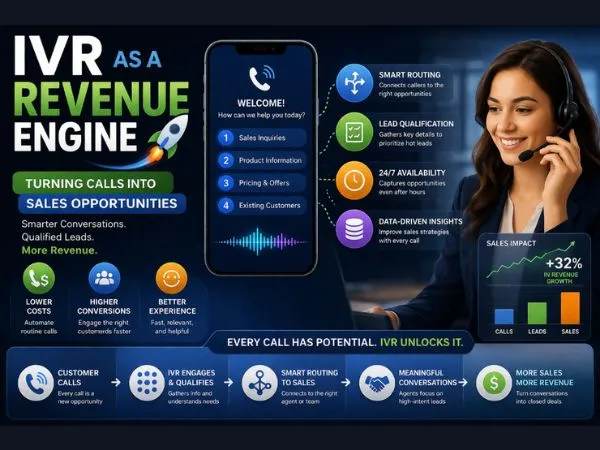
For many businesses, incoming calls are treated as a support function — something to manage, resolve, and move on from. But in reality, every call is a potential revenue opportunity.
With the right setup, IVR (Interactive Voice Response) can transform call handling from a cost center into a revenue engine — helping businesses capture better leads, route high-intent prospects faster, and convert more conversations into sales. Kommuno IVR is built exactly for this purpose, giving businesses the tools to stop treating calls as overhead and start treating them as opportunities.
IVR isn’t just about managing calls anymore. It’s about maximising the value of every inbound customer interaction.
The Missed Revenue Hidden in Everyday Calls
Most companies lose potential revenue because high-intent callers wait too long and drop off, sales leads get mixed with support calls, calls reach the wrong agent delaying conversions, and opportunities are lost due to inefficient routing.
A well-designed IVR structures inbound calls so sales opportunities are identified, prioritised, and handled effectively — before a single rupee slips through the cracks.
1. Identify High-Intent Sales Calls Instantly
Not every caller is ready to buy — but some are, and speed matters enormously when they are.
IVR can segment inbound calls based on intent, such as new product inquiries, pricing requests, demo or consultation interests, and existing customer upsell opportunities. This ensures sales-ready callers reach the sales team faster, improving conversion rates significantly.
Kommuno’s drag-and-drop IVR flow builder makes it easy to design these intelligent call paths without any technical expertise — so businesses can set up intent-based routing in minutes and start capturing more sales from day one.
Example: A SaaS company offering HR software uses IVR to route demo-related calls directly to its sales team, helping reps focus on prospects who are already interested in buying.
2. Reduce Sales Friction and Speed Up Conversions
In sales, speed equals revenue. The faster a prospect connects with the right person, the higher the chance of closing a deal.
IVR helps by reducing wait times, routing calls instantly to the right sales representative, and minimising unnecessary transfers. The Sticky Agent feature ensures that when a returning prospect calls back, they’re connected to the same representative they spoke with before — building rapport and accelerating the path to conversion.
Example: An EdTech business routes enrollment inquiries directly to senior counselors using IVR. As a result, they close more enrollments because high-intent callers get immediate attention.
3. Improve Lead Quality by Routing Smarter
IVR can route leads based on factors like location, language preference, product interest, and customer segment — SMB vs Enterprise. This ensures prospects speak with the most relevant sales expert, improving trust and deal success.
Kommuno supports multi-language IVR menus, which is especially powerful for businesses operating across India’s diverse regions. When a caller feels understood from the very first interaction, they’re far more likely to convert.
Example: A fintech company routes premium customers to experienced sales consultants, increasing conversion rates for high-value financial products.
4. Capture More Revenue from Missed or Overflow Calls
When call volumes spike, sales teams miss opportunities. IVR helps manage overflow by redirecting calls to available agents, managing peak-hour traffic more efficiently, and ensuring high-value sales calls are always prioritised.
With Kommuno’s cloud-based infrastructure, businesses handle surges in call volume without any additional hardware investment — paying only as they scale. This means fewer missed sales opportunities even during your busiest periods.
Example: A real estate firm used IVR to ensure property inquiry calls were routed to available agents first, helping convert more inquiries into site visits.
5. Build a More Professional and Trustworthy Sales Experience
A smooth, structured IVR flow builds credibility with potential buyers, makes your business appear organised and reliable, and increases customer confidence in engaging and purchasing. In competitive markets, experience often influences buying decisions as much as price.
Number masking adds another trust-building layer — protecting both agent and customer privacy during calls, which is particularly valuable in financial services, healthcare, and high-ticket sales environments.
6. Use IVR Insights to Optimise Sales Performance
Modern IVR systems provide analytics on which call paths convert best, call volume trends by product or campaign, and drop-off points in the sales funnel. These insights help teams refine sales strategy, optimise call routing, and improve revenue outcomes.
Kommuno’s real-time Call Analysis Dashboard gives sales managers a clear view of what’s working — which inquiry types convert, which agents perform best, and where prospects are dropping off. This data turns gut-feel decisions into evidence-backed strategy.
Example: A B2B services company analysed IVR data to identify which inquiry types converted best, allowing them to prioritise high-performing sales segments.
Final Thoughts: Turn Conversations into Conversions
IVR is no longer just a call management tool — it’s a strategic revenue driver.
By identifying high-intent callers, routing prospects faster, improving sales efficiency, and reducing missed opportunities, the right IVR system helps businesses turn everyday calls into measurable revenue growth. For SaaS and digital-first companies especially, it offers a powerful edge: more conversions, better lead handling, and higher revenue — without scaling headcount at the same pace.